Viral Police Street Stop Ignites New Debate Over Policing Standards and Civil Rights
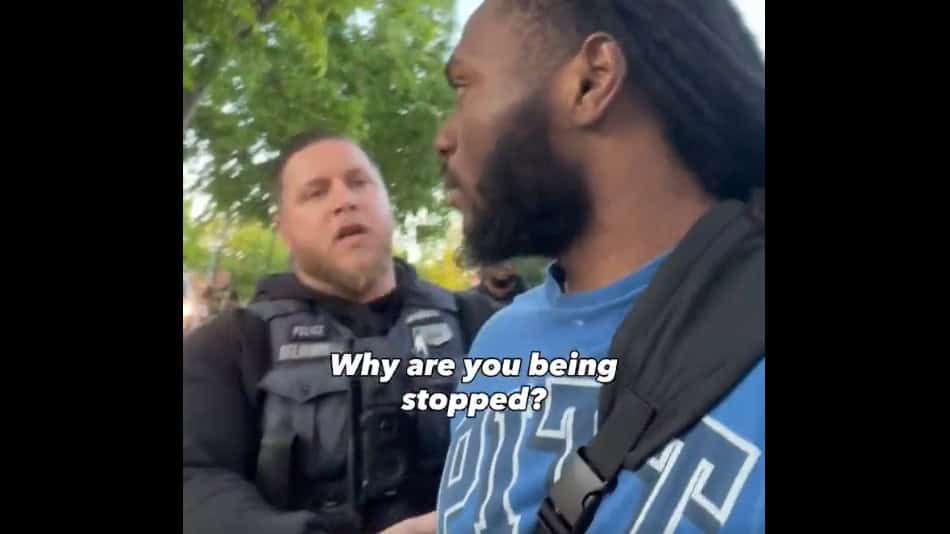
A widely circulated video showing a police stop of a Black man during a routine walk has ignited renewed debate over the boundaries of lawful searches and racial bias in policing.
In the footage, officers approach the man in an urban neighborhood, explaining that his behavior—specifically glancing back twice and adjusting a bag—raised concern that he might be carrying a weapon. Based on that suspicion, officers conducted a brief pat-down.
The man calmly questioned the officers, asking whether he was being detained. He declined to provide identification and remained composed throughout the encounter. After the search yielded nothing, he was allowed to leave. Speaking to a friend afterward, he appeared unfazed, noting that these types of interactions are a regular occurrence.
Online reaction to the video has been sharply divided. Some viewers argue the officers acted without sufficient cause, calling the stop an example of overreach that lacked reasonable suspicion. Others defend the decision, saying the behavior described could reasonably trigger concern in areas where officers are trained to be alert to potential threats.
The incident has brought attention back to the legal framework behind so-called stop and frisk practices. Under longstanding Supreme Court precedent, officers are permitted to briefly detain individuals if they have reasonable suspicion that criminal activity may be underway. A pat-down is allowed only if there is an additional belief that the person may be armed and dangerous. The scope of such a search is limited to outer clothing unless an object resembling a weapon is clearly detected.
Critics of the practice point to past legal rulings and statistical patterns. A 2013 federal court decision found that certain implementations of stop and frisk disproportionately targeted Black and Latino individuals. Data from major cities has also shown that the overwhelming majority of those stopped have been people of color, while the recovery of weapons in these encounters remains rare.
The latest video has added fuel to an ongoing national conversation about public safety, constitutional rights, and the balance between them.